Clarity for your financial future
Follow your current finances for decades, see what drives the result, then change the assumptions yourself.
Choose a scenario to exploreWhat happens if I never buy a property?
Follow an Australian early-career example from today through later working life. Change contributions, returns, inflation, and retirement timing inside the full scenario.
How different inputs change estimated minimum working years
Explore a US household example with established income, spending, 401(k), and Roth IRA assumptions.
Am I on track to retire in 10 years?
Explore a UK example that starts 10 years before retirement. Compare pension savings, ongoing contributions, spending, and access age to see what changes the estimate.
A decision rarely changes just one number.
Buy a home and your savings change. Take time out of work and your retirement contributions change. Retire earlier and your money needs to last longer. See those knock-on effects on one timeline.
How it works
- Add what you earn, own, owe, and spend.
- Put future events on the timeline.
- Set the assumptions you want to test.
- Change one thing and compare the estimate.
Highly detailed financial scenarios.
Nothing changes behind the scenes. Use the same inputs and you get the same estimate. Change a salary, expense, date, or return, then see the difference.
See how the calculation worksExplore what the modeller can do with worked examples.
Open any example without signing up. Check the assumptions, change the inputs, and see how a different salary, milestone, or retirement date changes the estimate.
I’m starting out
What happens if I never buy a property?
I’m mid-career
How different inputs change estimated minimum working years
I’m 10 years from retirement
Am I on track to retire in 10 years?
Our free NSW property data tool.
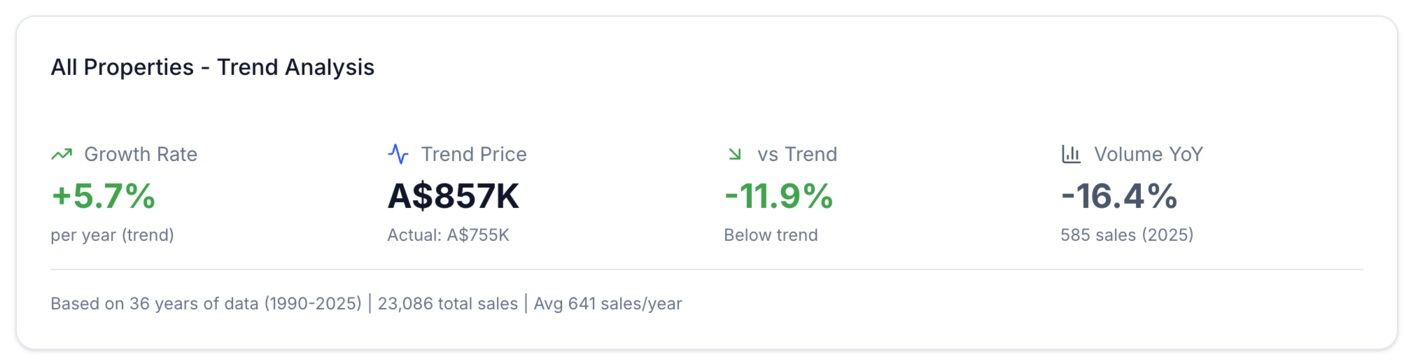
Explore historical sales through to the present day for a street or postcode. Compare a property you’re considering with sales across the surrounding area.
Track the big picture, not every transaction.
Update your assets, debts, income, and expenses about once a month—not every time you spend or the market moves. Each check-in shows how your overall finances are changing and gives your long-term scenarios a current place to start.
See an example snapshot